

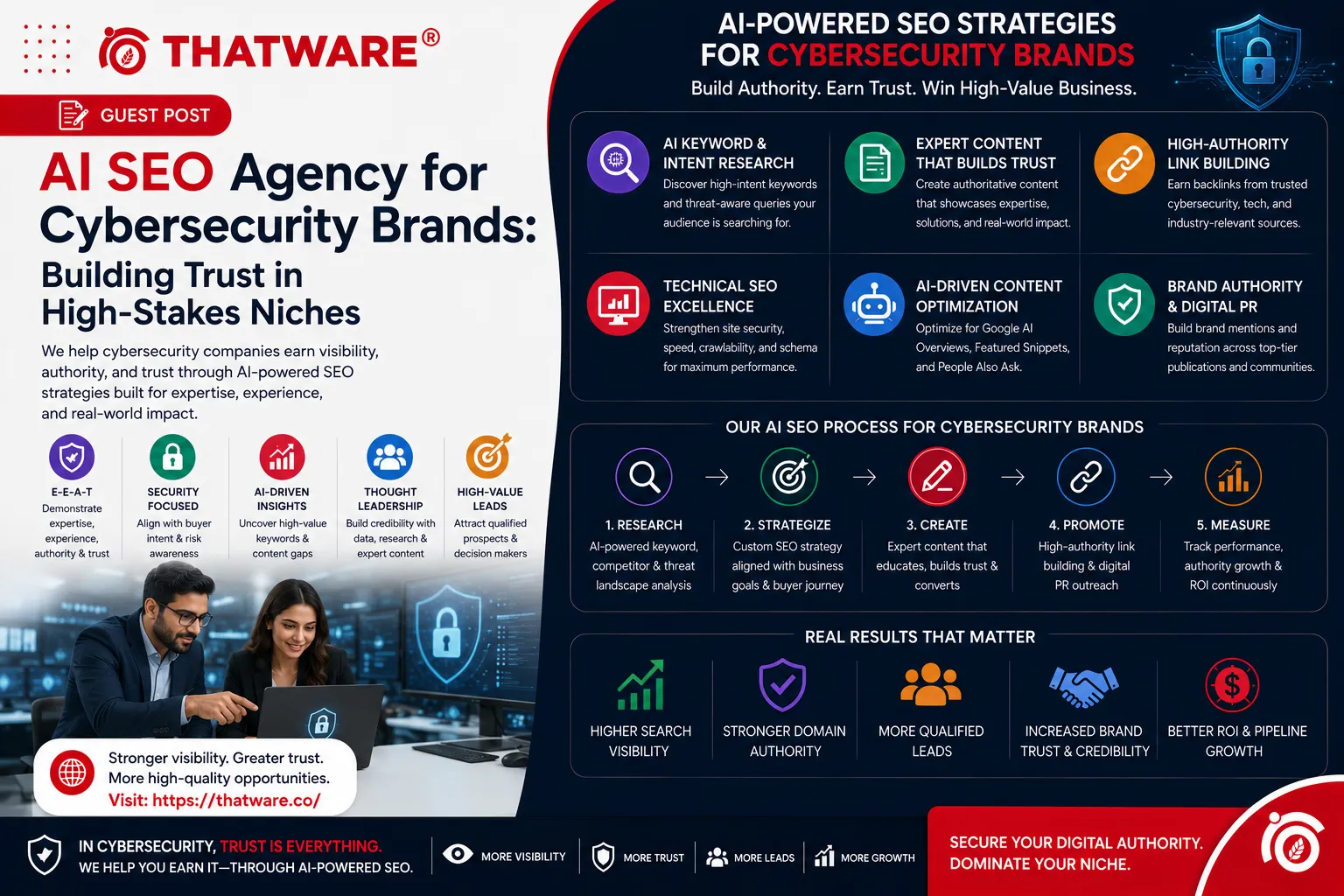
Cybersecurity is one of the hardest verticals to market in — and one of the most important to get right. The buyers are deeply technical and deeply skeptical. They’ve seen too many vendors make claims that don’t hold up under scrutiny. They’ve been burned by overpromised solutions and under-delivered results. And when they search for cybersecurity products and services, they’re not browsing. They’re evaluating. Every word, every claim, every piece of content gets held to a higher standard than almost anywhere else in B2B.
That context shapes everything about how SEO should work for cybersecurity brands.
The Trust Problem in Cybersecurity Search
Google’s quality rater guidelines talk extensively about YMYL — “Your Money or Your Life” — content. Cybersecurity falls squarely in that category. Poor advice about security tools or practices could lead to data breaches, financial losses, or worse. Search engines know this and apply elevated scrutiny to security-related content.
That means the usual SEO shortcuts don’t work here. Thin content. Generic “best practices” listicles. Keyword-stuffed landing pages that say a lot and demonstrate nothing. All of this gets deprioritized in security-related searches because Google’s systems have learned to reward genuine expertise over surface-level coverage.
The good news is that this makes quality a genuine competitive advantage. Cybersecurity brands that invest in deep, accurate, authoritative content can build search positions that are genuinely difficult for shortcuts-taking competitors to displace. Working with the best agency for AI search optimization that understands YMYL dynamics is one of the highest-leverage moves a security brand can make.
What Authority Looks Like in Cybersecurity SEO
Authority in this space is built from a specific set of signals:
Expert authorship — Content written by credentialed security professionals, with clear author bios, LinkedIn profiles, and verifiable expertise. Anonymous content from a “security team” carries almost no weight.
Original research and data — Threat intelligence reports, vulnerability disclosures, industry surveys, incident analysis. Content that presents original findings earns links and citations in a way that opinion pieces and tutorials simply can’t match.
Technical accuracy — Security professionals will fact-check your content. Getting details wrong — even minor ones — destroys credibility instantly. AI tools can assist with content production, but human expert review is non-negotiable in this space.
Media and publication mentions — Being cited in Dark Reading, Krebs on Security, The Hacker News, or mainstream outlets covering cybersecurity legitimizes your brand in ways that self-published content alone never can.
Industry recognition signals — Analyst mentions, award recognitions, conference speaking appearances — these entity signals tell search systems that your brand is a recognized player in the security space, not a newcomer with a blog.
The Technical Side of Cybersecurity SEO
Beyond content, technical SEO has some cybersecurity-specific nuances worth understanding.
Security brands often deal with content that could be dual-use — information about vulnerabilities, attack techniques, or exploitation methods that is entirely legitimate for a security audience but triggers safety filters if not properly contextualized. Getting this balance right requires both technical SEO expertise and genuine domain knowledge.
Site security itself is a ranking signal. A cybersecurity company with a website that has TLS misconfigurations, outdated plugins, or poor server security practices is sending a terrible implicit message. The technical hygiene of your own digital presence matters.
Structured data for security products — CVE references, product categories, certification claims — can be marked up in ways that help search engines accurately categorize and surface your offerings. This is underutilized in the security space.
Content Strategy for Cybersecurity Brands
The content that performs best in cybersecurity search falls into a few reliable categories:
Threat intelligence and analysis — Timely, accurate breakdowns of emerging threats. These earn links from security blogs, news aggregators, and industry publications when they’re genuinely informative.
Tool comparisons and category overviews — Security buyers do extensive research before purchasing. Comprehensive, honest comparisons of security tools in your category (including where your solution is and isn’t the right fit) build enormous trust.
Compliance and regulatory content — SOC 2, ISO 27001, GDPR, HIPAA — these compliance frameworks drive high-intent searches from organizations trying to understand their obligations. Coverage here captures buyers at a very clear point in their decision journey.
Incident response guides and playbooks — Practical, detailed resources that security teams can actually use. These earn bookmarks, shares, and backlinks from practitioners.
Explainers for non-technical decision makers — The CISO reports to a CEO. The CEO isn’t a security expert. Content that explains security concepts and risks in business terms is valuable and underserved.
Why AI-Native SEO Matters for Security Brands
The professional AI SEO company for businesses approach to cybersecurity SEO brings specific advantages. AI tools can analyze search intent patterns in real-time, helping brands identify emerging threat topics before they peak. They can map competitive content gaps across an entire security category. They can audit content quality signals at scale — identifying pieces that need expert review or technical updating before they become liabilities.
AI-powered link analysis can also identify the specific publications, researchers, and community platforms where authoritative cybersecurity links originate — making outreach more targeted and effective.
The Long Game in Cybersecurity Search
Security buyers don’t make fast decisions. They research extensively, consult peers, evaluate through proof-of-concept deployments, and often take months or years to convert. That buying journey means that content authority compounds over a long horizon — brands that consistently publish credible, useful content build recognition and trust that shows up in sales conversations as “I’ve been following your research for a while.”
That kind of brand recognition in a high-stakes, trust-dependent market is worth considerably more than a paid ad. And it’s what a genuine AI-native SEO strategy, executed with domain expertise and technical rigor, can actually build.
The standard in cybersecurity is high. The rewards for meeting it are proportionally significant.
